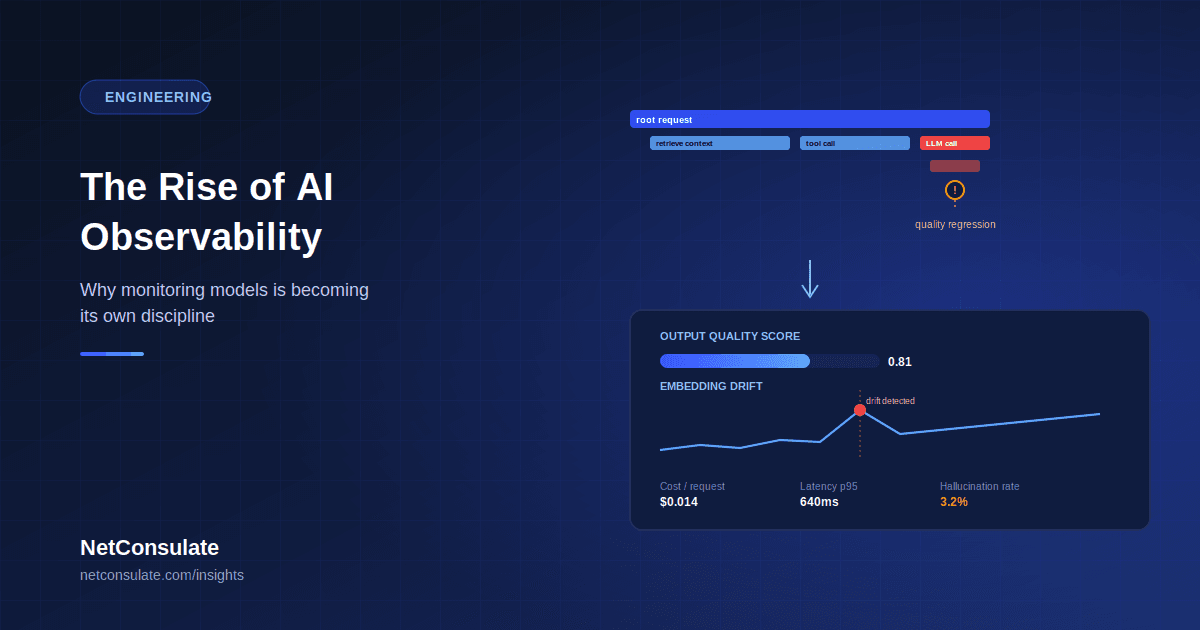
The Rise of AI Observability: Why Monitoring Models Is Becoming Its Own Discipline
A model can pass every pre-production evaluation and still silently degrade in production within weeks. Provider dashboards show token usage, not output quality. This guide covers the three pillars of AI observability — tracing, evaluation, and drift detection — the 2026 tooling landscape, and what production-grade monitoring actually requires.
 Featured
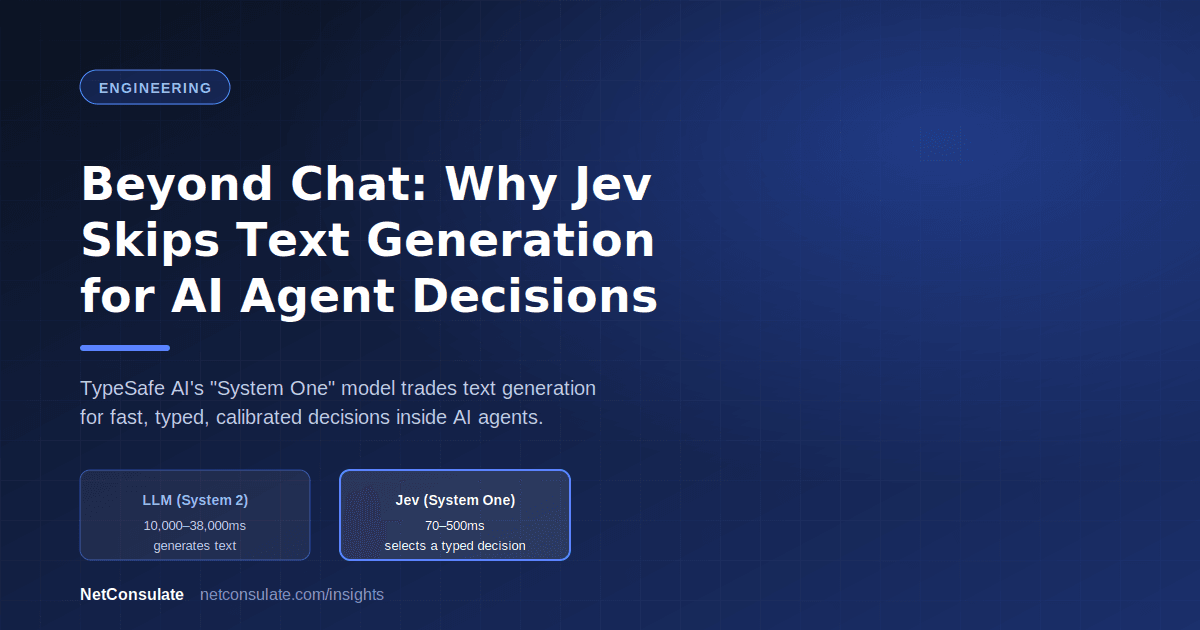
Beyond Chat: Why TypeSafe's Jev Skips Text Generation Entirely for AI Agent Decisions
Most AI agent steps aren't writing — they're deciding. TypeSafe's Jev bets on a fast, typed "System One" model instead of an LLM for exactly that slice of agent work.
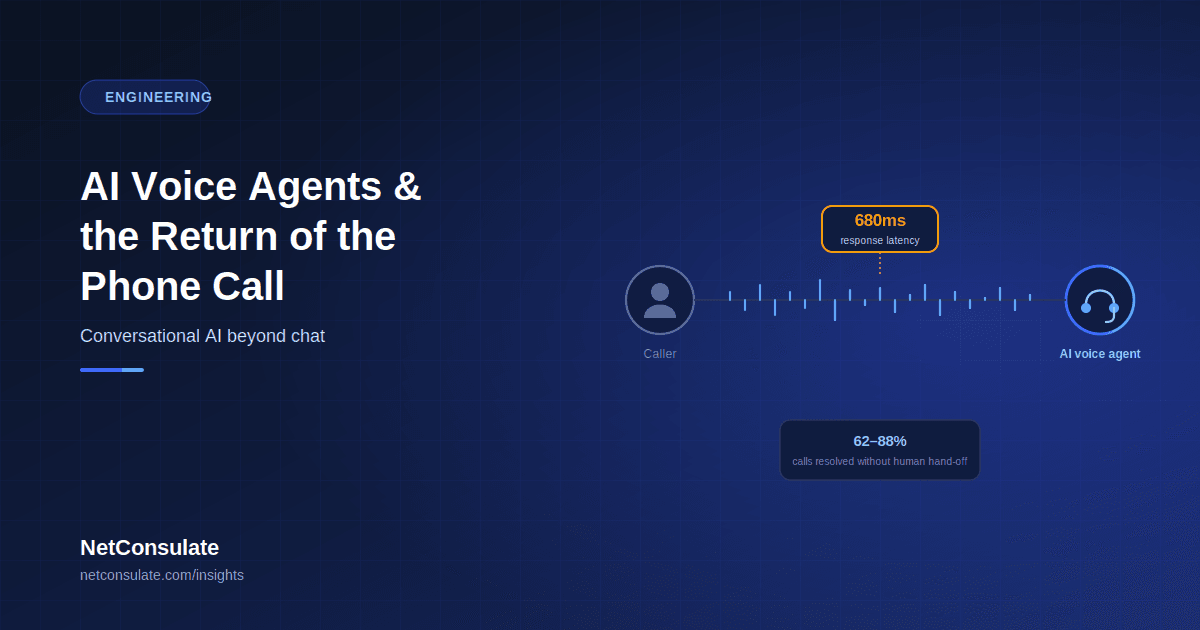
AI Voice Agents and the Return of the Phone Call: Conversational AI Beyond Chat
While enterprise AI attention has focused on chat and copilots, one of the fastest-moving deployment categories in 2026 is the channel everyone assumed AI would never crack: the phone call. This guide covers the real latency benchmarks that determine whether a voice agent works, the actual cost and ROI numbers, and what building one honestly requires.
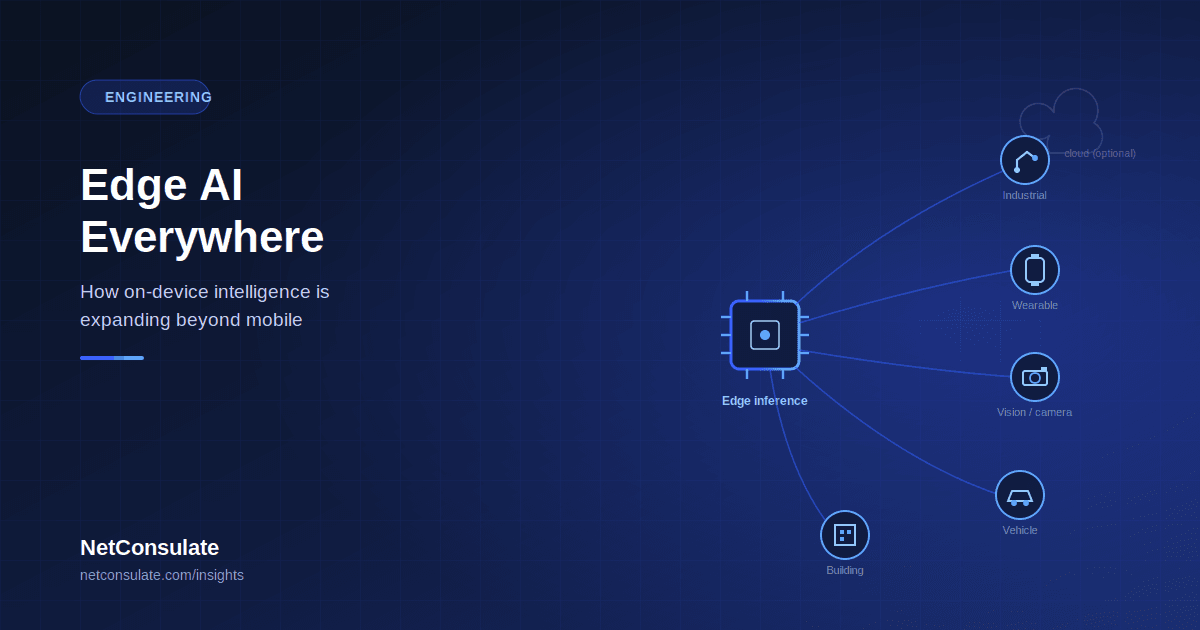
Edge AI Everywhere: How On-Device Intelligence Is Expanding Beyond Mobile
dge AI used to mean a camera filter on your phone. In 2026 it's production infrastructure inside industrial robots, hospital wearables, and building management systems — driven by silicon, manufacturing economics, and open models finally making it viable at scale. This guide covers what's driving the shift and what building for the edge actually requires
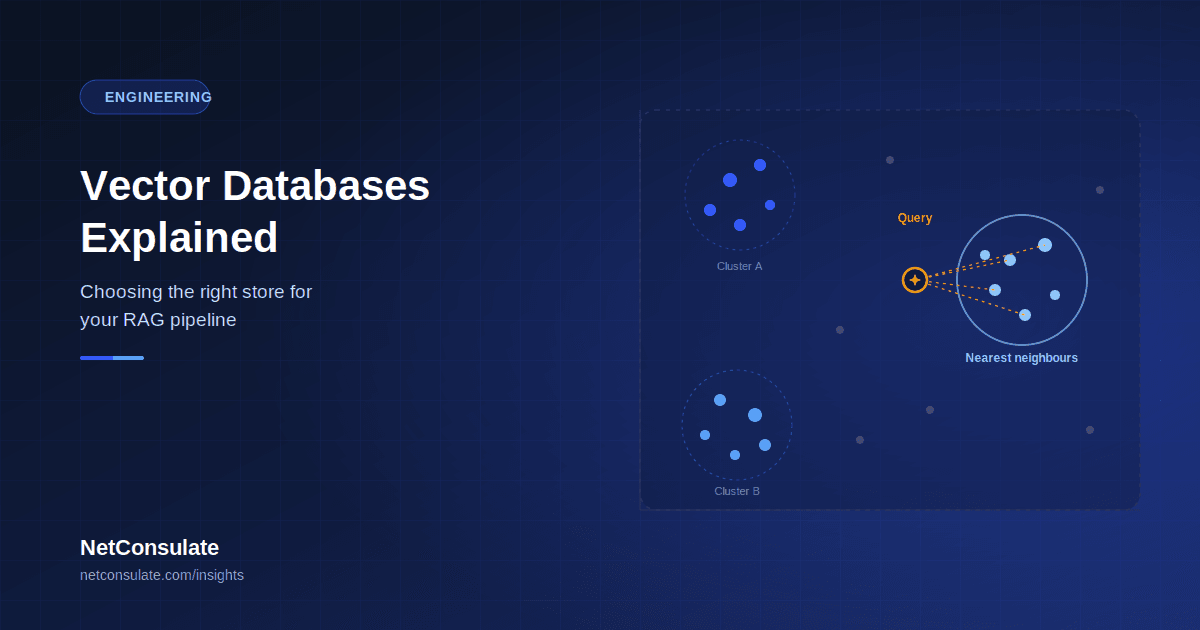
Vector Databases Explained: Choosing the Right Store for Your RAG Pipeline
Every RAG system needs a vector database, and every comparison seems to contradict the last one. This guide covers what a vector database actually does, the decision framework practitioners who've shipped dozens of production systems actually use, how pgvector, Pinecone, Qdrant, and Weaviate compare, and the mistake that costs teams the most time.
 Featured
World Models and Physical AI: What Robotics Breakthroughs Mean for Manufacturing
"Physical AI has arrived," NVIDIA's CEO declared at GTC 2026 — backed by named partnerships with FANUC, KUKA, ABB, and Yaskawa, not robotics startups. This guide explains what world models actually are, what's genuinely deployed versus still research, and what manufacturers should do with this today.
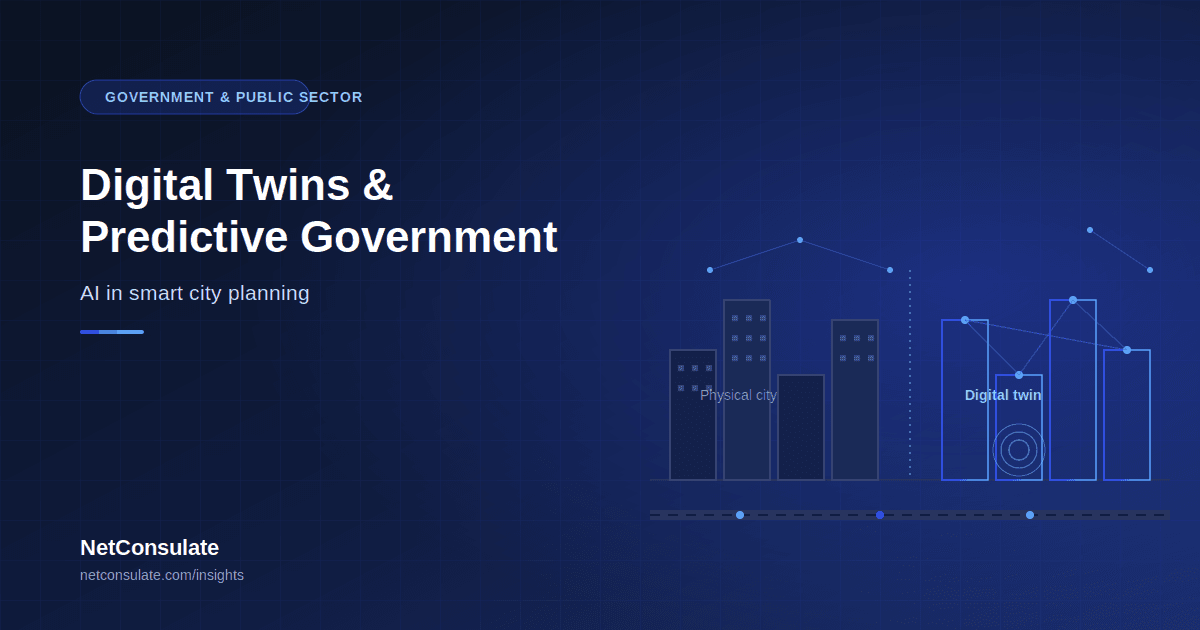
Digital Twins and Predictive Government: AI in Smart City Planning
What if planners could stress-test flood risk against a once-in-a-century storm in minutes, not months? Digital twins are already running in cities from Singapore to Helsinki to Boston. This guide covers what's deployed today, the real costs, and the governance discipline public-sector AI decisions demand.
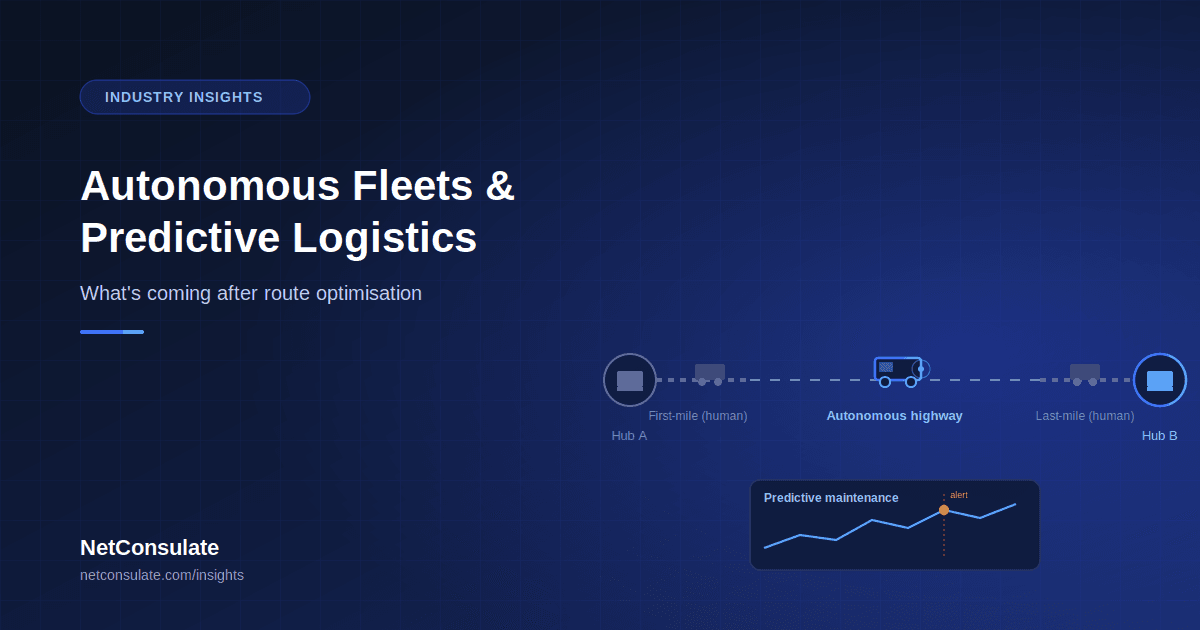
Autonomous Fleets and Predictive Logistics: What's Coming After Route Optimisation
Driverless trucks are hauling real freight on real highways today — not in a demo, in commercially booked hub-to-hub routes. This guide covers what's genuinely deployed versus still maturing, why predictive maintenance already has documented ROI, and what logistics operators should build toward regardless of their autonomy timeline.
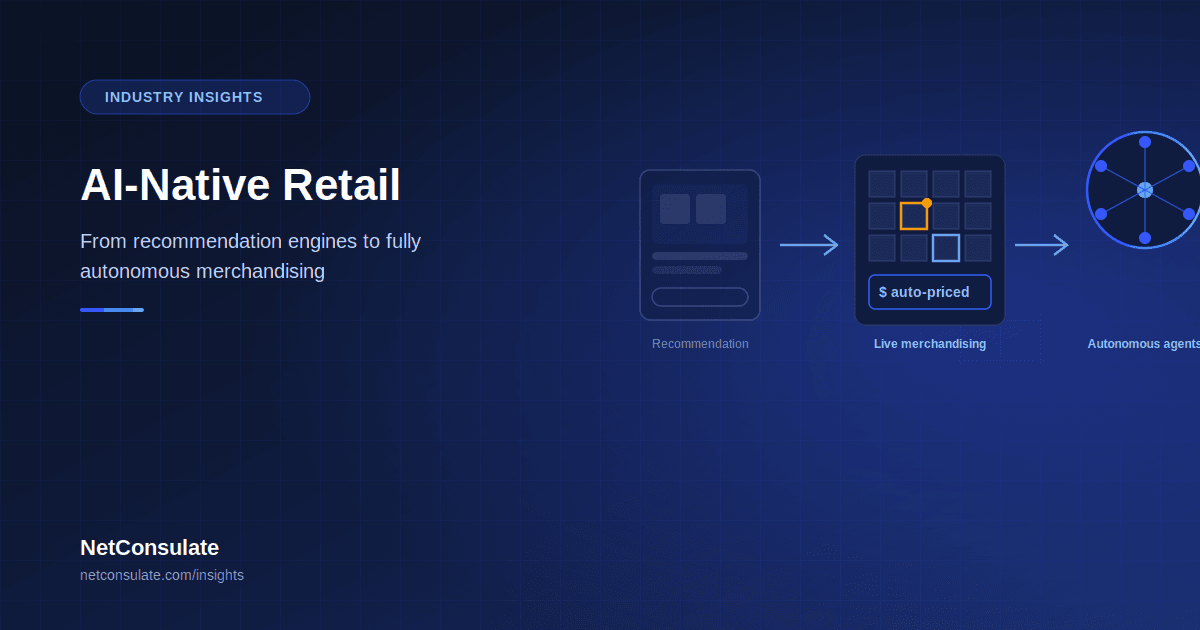
AI-Native Retail: From Recommendation Engines to Fully Autonomous Merchandising
The recommendation engine is table stakes now. What's running in 2026 is a different order of change — AI agents autonomously deciding pricing, rerouting inventory, and coordinating with suppliers at Walmart, Target, and Amazon scale. This guide covers what's already in production, the zero-click commerce shift, and what building agent-ready retail infrastructure requires.
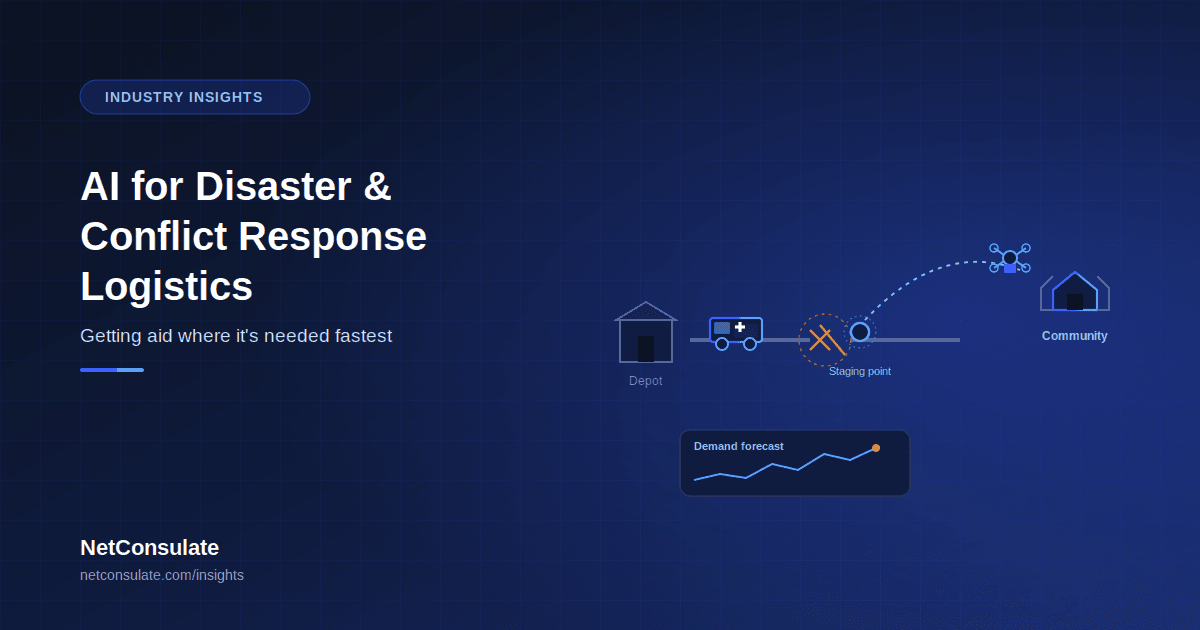
AI for Disaster and Conflict Response Logistics: Getting Aid Where It's Needed Fastest
Roads get blocked. Communication fails. Needs shift by the hour. AI is now a documented part of how leading humanitarian operations close that gap — from the seismic analysis that aided the Türkiye-Syria earthquake response to the two-echelon truck-and-drone routing validated against real Hurricane Maria data. This guide covers what's working, and the honest gaps that remain.
The Autonomous Classroom: AI Tutors and the Future of Personalised Education
Generative AI is making genuinely individualised tutoring viable for thousands of students at once — not just families who could once afford a private tutor. This guide covers what AI tutoring can actually do, the real limitations, and a detailed look at how it can support students with learning disabilities, ADHD, autism, sensory impairments, and other conditions — as a support to professional care, never a replacement for it.
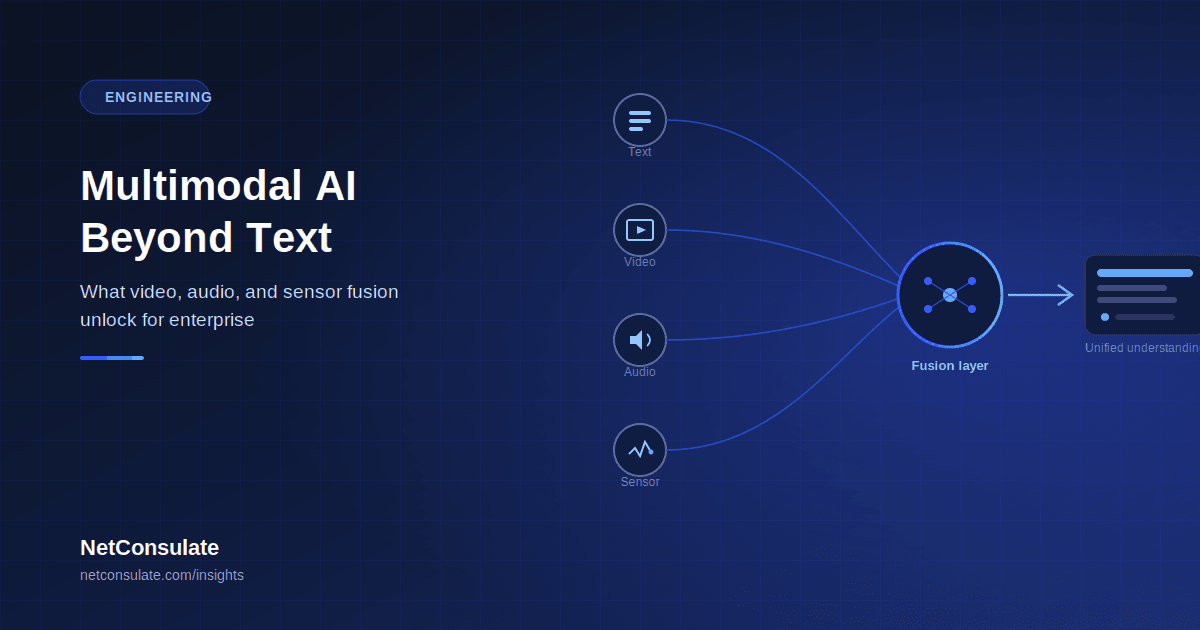
Multimodal AI Beyond Text: What Video, Audio, and Sensor Fusion Unlock for Enterprise
Most enterprise AI still defaults to text — but a growing share of what actually matters to a business never arrives as text at all. This guide explains how multimodal fusion works, where it's already delivering measurable value from manufacturing to customer support, and what building it honestly requires.
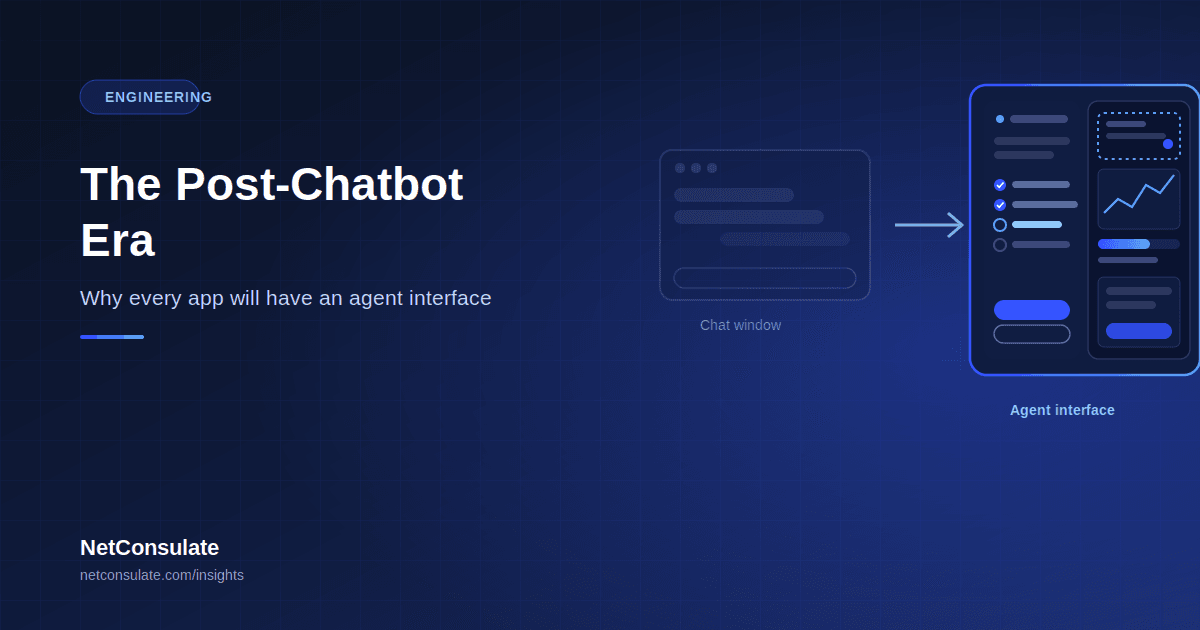
The Post-Chatbot Era: Why Every App Will Have an Agent Interface
Chatbots answer questions. Agents complete work. In 2026, the interface itself — not just the model behind it — has become the next major battleground in AI product design, with generative UI, plan-review-execute patterns, and split-screen agent workspaces replacing the chat window as the default. Here's what's replacing chat, and what building an agent-ready interface actually requires.
Gemini Nano 4 on Android: What Developers Need to Know
Google I/O 2025 redefined what Android devices can do with AI. Gemini Nano 4 brings multimodal on-device intelligence to Android — and with AppFunctions, your app's capabilities become part of the Android AI fabric. Here is everything developers need to know to build with it.
Small Language Models: Why Bigger Isn't Always Better
For three years enterprise AI strategy meant reaching for the biggest model available. In 2026, that instinct is costing companies real money — Microsoft's 14B-parameter Phi-4 has been shown outperforming 671B models on reasoning benchmarks, at 15x the speed. This guide covers the benchmark data, the real cost economics, and the hybrid routing architecture now running in production.
AI Governance in 2027: Preparing for the Next Wave of Global Regulation
Over 75 countries are now actively developing AI legislation, and enforcement has moved from theoretical to real — €250 million in EU fines in Q1 2026 alone. This guide maps where the US, Europe, Australia, Japan, China, and the Middle East actually stand heading into 2027, and what it means for organisations operating across borders.
Agentic Commerce: How AI Agents Will Shop, Book, and Buy on Your Behalf
2026 is the year agentic commerce moved from experiment to infrastructure — Visa integrated with ChatGPT, Mastercard launched Agent Pay for Machines, and Google brought checkout into Gemini. This guide covers what launched, what already failed and why, the protocol landscape, and what it means for businesses on both sides of the transaction.
Data Scarcity and the Synthetic Data Boom
The high-quality human data that fuelled the AI revolution is running out — walled off by lawsuits, privacy law, and sheer exhaustion. This guide explains how synthetic data pipelines actually work, how model collapse is managed in practice, the legal and privacy case, and the practical entry points for enterprise teams.
Fine-Tuning vs RAG: Which Approach Fits Your Use Case?
Every enterprise LLM project reaches the same fork: teach the model (fine-tuning) or feed the model (RAG). This guide gives a six-question decision framework, honest cost comparison, the failure modes of each approach, and the hybrid pattern production systems increasingly use.
AppFunctions Tutorial: Building Android MCP Integrations
With AppFunctions — Android's Model Context Protocol — your app's capabilities become tools that system AI agents like Gemini can discover and invoke. This hands-on tutorial covers project setup, writing agent-ready functions, service registration, the security wiring that is not optional, and testing from the ADB shell.
Building Autonomous AI Agents: Architecture and Design Patterns
The gap between an impressive agent demo and a dependable production agent is wider than in any other category of AI system. This guide covers the agent loop, tool design, planning patterns, memory architecture, multi-agent structures, and the guardrail and evaluation discipline that makes autonomy safe to ship.
Computer Vision in Manufacturing: Defect Detection at Scale
AI-powered visual inspection changes the quality arithmetic: every part inspected at line speed with consistent criteria. This guide covers the imaging foundation most projects underinvest in, anomaly-first modelling for manufacturing's data reality, escape-rate economics, edge deployment wired into your PLCs, and the feedback loop that sustains 99%+ detection.
AI for Legal: Contract Review and E-Discovery Systems
Legal work is document work at scale — ideal AI territory, but with professional stakes most industries never face. This guide covers contract review AI, court-accepted TAR protocols for e-discovery, RAG-grounded legal research, the hallucination problem, and privilege-aware architecture.
Fraud Detection AI: How Fintech Companies Achieve 90%+ Accuracy
Fraud detection at 90%+ detection rates with minimal customer friction is an achievable engineering outcome — but "accuracy" is the wrong word for what matters. This guide covers the real metrics, the technique stack from gradient boosting to graph analytics, false positive economics, and the feedback loop that keeps performance high as fraudsters adapt.
Predictive Maintenance AI: Implementation Guide for Manufacturers
Predictive maintenance converts 2 a.m. equipment failures into scheduled work orders. This implementation guide covers the P-F interval concept, sensor and data requirements, choosing between anomaly detection and failure prediction, edge-vs-cloud architecture, and a phased roadmap that produces ROI rather than another stalled pilot.
EU AI Act 2026: What Software Buyers Need to Know
The EU just finalised major amendments to the AI Act — deferring high-risk obligations to December 2027 while holding firm on chatbot transparency from August 2026. Here is what software buyers need to know about risk classification, vendor due diligence, and contracting for compliance.
MLOps Explained: From Model Training to Production
Most machine learning projects fail in the gap between a promising notebook and a reliable production system. This guide explains the MLOps lifecycle, why ML differs from traditional software, the maturity levels, and the tooling — written for engineering leaders, not just ML specialists.
AI in Healthcare: Building HIPAA-Compliant Clinical Decision Support
Clinical decision support is where healthcare AI delivers its clearest value — and where compliance stakes are highest. This guide covers HIPAA fundamentals for AI teams, de-identification done properly, mapping the Security Rule to your architecture, the FDA device question, and LLM-specific rules.
What is RAG? A Practical Guide for Enterprise Teams
Retrieval-Augmented Generation (RAG) is the standard architecture for enterprise AI systems that need accurate answers from your own data. This guide explains how RAG works, when to use it over fine-tuning, what it costs, and how to implement it — written for technical decision-makers, not just data scientists.